The Riemann Hypothesis, often described as the holy grail of mathematics, has remained one of the most profound unsolved problems for over a century. Proposed by the German mathematician Bernhard Riemann in 1859, this conjecture delves into the enigmatic distribution of prime numbers—those indivisible integers that serve as the building blocks of all numbers. Despite countless attempts by the brightest minds in mathematics, the hypothesis continues to resist proof, standing as a testament to the complexity and beauty of number theory.
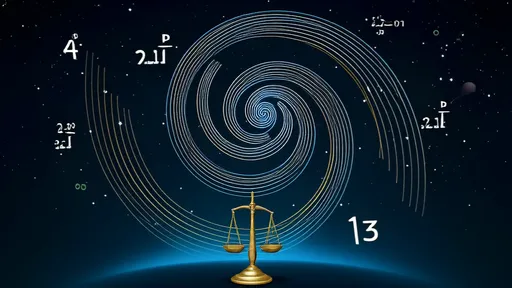
At its core, the Riemann Hypothesis is concerned with the zeros of the Riemann zeta function, a complex mathematical construct that holds deep connections to the primes. Riemann suggested that all non-trivial zeros of this function lie on a specific vertical line in the complex plane, known as the critical line. If proven true, this would provide an unprecedented understanding of how prime numbers are scattered across the number line, offering a precise formula to predict their occurrence with remarkable accuracy.
The allure of the Riemann Hypothesis lies not just in its mathematical elegance but also in its far-reaching implications. A proof would revolutionize fields as diverse as cryptography, quantum physics, and even computer science. Modern encryption systems, for instance, rely heavily on the unpredictable nature of primes. Unlocking their distribution pattern could either strengthen these systems or, conversely, render them vulnerable to new attacks. The hypothesis is so significant that the Clay Mathematics Institute has included it among its seven Millennium Prize Problems, offering a million-dollar reward for its resolution.
Yet, despite its importance, progress has been painstakingly slow. Over the decades, mathematicians have verified that trillions of zeros of the zeta function do indeed lie on the critical line, providing strong empirical support for Riemann's claim. However, in mathematics, no amount of computational evidence can substitute for a rigorous proof. The absence of a general solution has only deepened the mystery, fueling both frustration and fascination within the academic community.
One of the most intriguing aspects of the Riemann Hypothesis is its unexpected connections to other areas of mathematics and physics. For example, some researchers have drawn parallels between the distribution of zeta zeros and the energy levels of quantum systems—a surprising bridge between number theory and quantum mechanics. These interdisciplinary links suggest that a breakthrough in understanding the hypothesis could have ripple effects far beyond pure mathematics, potentially unlocking new paradigms in science.
The pursuit of the Riemann Hypothesis has also highlighted the limitations of current mathematical tools. Many experts believe that proving the conjecture will require the development of entirely new techniques or frameworks, much like how the proof of Fermat's Last Theorem demanded innovative approaches centuries after its initial statement. This has led to a vibrant, if sometimes contentious, dialogue within the mathematical community about the best pathways forward.
What makes the Riemann Hypothesis uniquely captivating is its deceptive simplicity. The conjecture can be stated in a single sentence, yet its implications are staggeringly deep. This duality—a problem easy to state but nearly impossible to solve—has made it a magnet for both professional mathematicians and enthusiastic amateurs. History is littered with incorrect proofs, some from respected scholars and others from self-taught individuals convinced they had cracked the code. The hypothesis, in many ways, serves as a humbling reminder of the vast unknowns that still exist in mathematics.
As the 21st century progresses, the Riemann Hypothesis remains as elusive as ever. While some researchers continue to chip away at the problem directly, others are exploring tangential questions, hoping that a solution might emerge from an unexpected angle. Whether the conjecture will be proven in our lifetime is anyone's guess. But one thing is certain: the journey to solve it has already enriched mathematics in ways Riemann himself could scarcely have imagined.

By /Jun 20, 2025
By /Jun 20, 2025
By /Jun 20, 2025

By /Jun 19, 2025

By /Jun 19, 2025

By /Jun 19, 2025

By /Jun 19, 2025
By /Jun 19, 2025

By /Jun 19, 2025
By /Jun 19, 2025
By /Jun 19, 2025

By /Jun 19, 2025

By /Jun 19, 2025
By /Jun 19, 2025
By /Jun 19, 2025
By /Jun 19, 2025

By /Jun 19, 2025
