Neurodegenerative Diseases: Brain Pathologies Triggered by Protein Misfolding

Jun 19, 2025 By

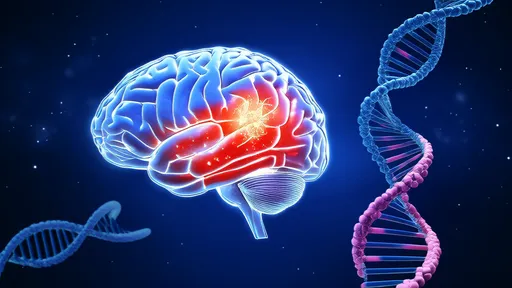
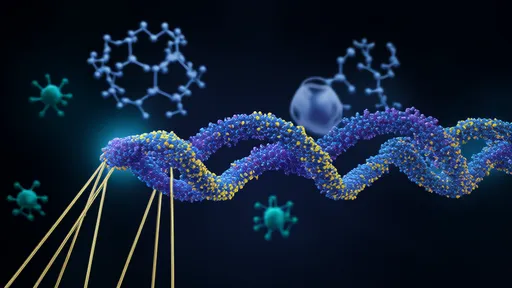
The human brain, a marvel of biological engineering, remains vulnerable to insidious processes that gradually erode its function. Among the most perplexing and devastating of these are neurodegenerative diseases, where the very building blocks of neurons – proteins – turn against the intricate machinery they once supported. At the heart of this betrayal lies a fundamental biological flaw: protein misfolding, a process where molecules crucial for cellular function twist into malignant shapes, triggering cascades of destruction.

For decades, researchers have grappled with the paradox that proteins essential for life can morph into lethal agents. In Alzheimer's disease, amyloid-beta peptides clump into sticky plaques between neurons, while tau proteins form tangled fibrils inside cells. Parkinson's disease reveals a similar pattern, with alpha-synuclein aggregating into Lewy bodies that disrupt dopamine production. These pathological hallmarks aren't merely bystanders but active participants in neuronal demise, though the exact mechanisms remain hotly debated.

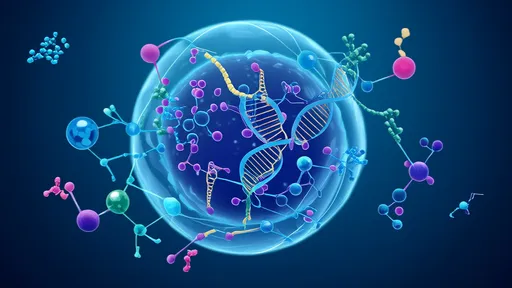
The protein folding problem extends far beyond simple structural errors. Cellular quality control systems, including chaperone proteins and the ubiquitin-proteasome pathway, typically identify and rectify misfolded molecules. However, when these systems become overwhelmed or dysfunctional, aberrant proteins accumulate. Some researchers propose that small, soluble oligomers – intermediate forms of misfolded proteins – may be more toxic than the large, insoluble aggregates visible under microscopes. These oligomers can perforate cell membranes, disrupt synaptic communication, and trigger inflammatory responses from microglia.

What makes certain proteins particularly prone to misfolding remains an area of intense investigation. Genetic mutations account for some cases, as seen in familial forms of neurodegenerative diseases. The APOE ε4 allele, for instance, dramatically increases Alzheimer's risk likely by influencing amyloid-beta clearance. Environmental factors also play significant roles – pesticide exposure has been linked to Parkinson's, while traumatic brain injury may accelerate tau pathology. Aging, the greatest risk factor for most neurodegenerative diseases, likely contributes through declining protein quality control mechanisms and cumulative cellular damage.

The spread of misfolded proteins through the brain follows disturbing patterns. Prion-like mechanisms, where malformed proteins induce normal counterparts to adopt pathological conformations, may explain the stereotypical progression seen in many diseases. In Alzheimer's, pathology often begins in memory-related regions before spreading diffusely. Parkinson's typically starts in the brainstem before affecting motor control areas. This propagation might occur through synaptic connections or extracellular spaces, with different proteins exhibiting distinct "strains" that influence disease characteristics.

Diagnostic challenges abound because symptoms often emerge only after substantial neuronal loss occurs. Biomarkers like cerebrospinal fluid protein levels and PET imaging of amyloid or tau provide windows into disease processes, but accessibility remains limited. Blood-based biomarkers showing promise could revolutionize early detection, allowing interventions before irreversible damage accumulates. The recent development of alpha-synuclein seed amplification assays for Parkinson's exemplifies this progress, detecting pathological forms years before symptom onset.

Treatment strategies have evolved from symptom management to targeting root causes. Monoclonal antibodies like aducanumab and lecanemab, which clear amyloid-beta, represent first-generation disease-modifying therapies for Alzheimer's, albeit with modest clinical benefits. Small molecules that inhibit protein aggregation or enhance clearance mechanisms show potential in preclinical studies. Gene therapies aiming to silence mutant genes or boost protective factors are entering clinical trials. Perhaps most intriguing are approaches targeting protein folding itself – pharmacological chaperones that stabilize native conformations or compounds that redirect misfolded proteins toward degradation pathways.

The complexity of neurodegenerative diseases demands equally sophisticated research models. Traditional cell cultures and animal models, while invaluable, often fail to fully recapitulate human pathology. Human induced pluripotent stem cell-derived neurons now allow study of patient-specific disease mechanisms. Organoids – miniature, simplified versions of brain structures – enable observation of protein pathology in three-dimensional environments. Computational models predicting protein folding dynamics and artificial intelligence analyzing vast datasets are accelerating discovery in ways unimaginable a decade ago.

Beyond medical interventions, lifestyle factors influence protein homeostasis. Exercise enhances cellular stress responses and protein quality control. Dietary patterns like the Mediterranean diet may reduce inflammation linked to protein misfolding. Cognitive engagement appears to build resilience against pathology, the concept of cognitive reserve. While these measures don't prevent disease outright, they may delay onset or slow progression, buying valuable time for developing more effective treatments.

The socioeconomic burden of protein misfolding disorders grows as populations age, with costs extending far beyond healthcare to lost productivity and caregiver strain. This crisis spurs unprecedented collaboration between academia, industry, and patient advocacy groups. Open science initiatives share data across institutions, while adaptive clinical trial designs accelerate therapeutic evaluation. Patient registries and biomarker studies create frameworks for precision medicine approaches tailored to individual disease subtypes.

Ethical considerations loom large as diagnostic capabilities outpace treatment options. The ability to predict diseases decades before symptoms raises questions about psychological impacts and insurance discrimination. Experimental therapies carry risks of serious side effects, as seen with brain swelling and microbleeds from amyloid-targeting antibodies. Equitable access to emerging treatments presents another challenge, with costly therapies potentially exacerbating healthcare disparities.

Looking forward, the protein misfolding paradigm continues to evolve. Once viewed as distinct entities, neurodegenerative diseases increasingly appear as spectra with overlapping mechanisms. The same proteins misfold in different ways to produce varied clinical pictures. This realization fuels search for common therapeutic targets that might benefit multiple conditions. Meanwhile, emerging research explores how protein misfolding interacts with other aging-related processes like mitochondrial dysfunction and neuroinflammation.

The journey from fundamental discoveries about protein structure to effective therapies has been longer and more arduous than anticipated. Yet each failed clinical trial yields insights refining subsequent approaches. As understanding of protein misfolding deepens, so does the potential to develop interventions that not just alleviate symptoms but halt or prevent the underlying disease processes. For millions affected by these devastating conditions and their families, this scientific pursuit represents hope against previously inexorable decline.
Recommend Posts
Science

Carbon Cycle in Ecosystems: The Material Flow Chain from Atmosphere to Organisms

By /Jun 20, 2025

The intricate dance of carbon through Earth's ecosystems represents one of nature's most elegant balancing acts. From the air we breathe to the wood of ancient trees, carbon atoms embark on remarkable journeys that sustain life while maintaining atmospheric equilibrium. This perpetual cycling connects all living organisms through an invisible web of matter and energy exchange that has shaped our planet for billions of years.
Science

Doppler Effect: The Mystery of Frequency Changes in Sound and Light

By /Jun 20, 2025

The Doppler effect is one of those fascinating phenomena that we encounter in our daily lives without always realizing it. Whether it’s the changing pitch of a passing ambulance siren or the redshift observed in distant galaxies, this principle governs how waves—be they sound or light—behave when there’s relative motion between the source and the observer. The implications stretch far beyond simple observations, influencing fields as diverse as astronomy, medicine, and even traffic control.
Science

The Big Bang: A Scientific Explanation of the Origin of Everything

By /Jun 20, 2025

The universe as we know it began with an event so cataclysmic that its echoes still reverberate through the fabric of space and time. The Big Bang theory, the prevailing cosmological model, describes the birth of the cosmos from an infinitely dense and hot singularity approximately 13.8 billion years ago. This singular moment marked not just the beginning of matter and energy but also the very dimensions of space and time themselves. The implications of this theory stretch far beyond mere astrophysics—it reshapes our understanding of existence, causality, and the fundamental nature of reality.
Science

Artificial Photosynthesis: Simulating Solar Energy Conversion in the Lab

By /Jun 19, 2025

In the quiet hum of laboratories around the world, scientists are bending light to their will, attempting to replicate one of nature’s most elegant feats: photosynthesis. For decades, the dream of artificial photosynthesis has tantalized researchers, offering the promise of clean energy harnessed directly from sunlight, much like plants have done for millions of years. But where plants effortlessly convert sunlight, water, and carbon dioxide into oxygen and glucose, human-made systems have struggled to match this efficiency. Recent breakthroughs, however, suggest that the gap may finally be narrowing.
Science

Topological Data Analysis: Geometric Approaches to Unraveling the Structure of Complex Datasets

By /Jun 19, 2025

In the age of big data, traditional statistical methods often struggle to capture the intricate structures hidden within vast and high-dimensional datasets. Enter topological data analysis (TDA), a revolutionary approach that borrows concepts from algebraic topology to uncover the shape and connectivity of data. Unlike conventional techniques that focus on metrics like mean or variance, TDA treats data as a geometric object, revealing holes, clusters, and persistent features that persist across multiple scales. This paradigm shift is transforming fields ranging from genomics to finance, offering insights that were previously invisible to analysts.
Science

Neurodegenerative Diseases: Brain Pathologies Triggered by Protein Misfolding

By /Jun 19, 2025

The human brain, a marvel of biological engineering, remains vulnerable to insidious processes that gradually erode its function. Among the most perplexing and devastating of these are neurodegenerative diseases, where the very building blocks of neurons – proteins – turn against the intricate machinery they once supported. At the heart of this betrayal lies a fundamental biological flaw: protein misfolding, a process where molecules crucial for cellular function twist into malignant shapes, triggering cascades of destruction.
Science

Performance of Carbon Nanotubes: The Mechanical and Electrical Wonders of One-Dimensional Nanomaterials

By /Jun 19, 2025

The world of nanomaterials has witnessed a revolution with the discovery and development of carbon nanotubes (CNTs). These one-dimensional nanostructures, composed of rolled-up graphene sheets, have captivated researchers and engineers alike with their extraordinary mechanical and electrical properties. Unlike any other material known to man, carbon nanotubes combine strength, flexibility, and conductivity in ways that defy conventional material science paradigms.
Science

Cosmic Ray Origin: The Mystery of High-Energy Particle Acceleration Across the Interstellar Medium

By /Jun 19, 2025

The universe is a vast and mysterious place, filled with phenomena that challenge our understanding of physics. Among the most enigmatic of these are cosmic rays—high-energy particles that travel through space at nearly the speed of light. Their origins have puzzled scientists for over a century, and despite significant advances in astrophysics, the mechanisms behind their acceleration remain one of the great unsolved mysteries of modern science.
Science

Molecular Switches of Stem Cell Differentiation: The Destiny Determination of Totipotent Cells

By /Jun 19, 2025

In the intricate dance of embryonic development, totipotent stem cells hold a unique position as the ultimate architects of life. These remarkable cells, capable of giving rise to an entire organism, make fate-determining decisions through an exquisitely tuned molecular symphony. Recent breakthroughs have begun to unravel the complex regulatory networks that serve as biological switches, directing these master cells toward their ultimate destinies.
Science

Magnetic Confinement Fusion: The Quest for Artificial Sun in Tokamak Devices

By /Jun 19, 2025

The quest for harnessing the power of the stars has long captivated scientists and engineers, and at the forefront of this endeavor lies the tokamak—a donut-shaped chamber designed to replicate the fusion processes that fuel our sun. Magnetic confinement fusion, the principle behind tokamaks, offers a tantalizing glimpse into a future of nearly limitless, clean energy. Unlike traditional nuclear fission, which splits atoms and produces long-lived radioactive waste, fusion combines light atomic nuclei, releasing vast amounts of energy with minimal environmental impact. The tokamak, with its intricate magnetic fields, stands as humanity’s most promising tool to achieve this dream.
Science

Riemann Hypothesis: The Century-Old Unsolved Problem of Prime Number Distribution Law

By /Jun 19, 2025

The Riemann Hypothesis, often described as the holy grail of mathematics, has remained one of the most profound unsolved problems for over a century. Proposed by the German mathematician Bernhard Riemann in 1859, this conjecture delves into the enigmatic distribution of prime numbers—those indivisible integers that serve as the building blocks of all numbers. Despite countless attempts by the brightest minds in mathematics, the hypothesis continues to resist proof, standing as a testament to the complexity and beauty of number theory.
Science

Deep-Sea Hydrothermal Vent Ecosystem: An Oasis of Life Relying on Chemical Energy in the Darkness

By /Jun 19, 2025

In the perpetual darkness of the ocean’s abyss, where sunlight cannot penetrate and pressures crush all but the most resilient, life thrives in ways that defy conventional understanding. Deep-sea hydrothermal vents, often called "black smokers," spew superheated, mineral-rich fluids into the frigid water, creating oases of life in an otherwise barren landscape. These otherworldly ecosystems are sustained not by photosynthesis, but by chemosynthesis—a process where microbes convert toxic chemicals into energy, forming the foundation of a food web that supports an array of bizarre and fascinating creatures.
Science

Artificial Neural Networks: Algorithmic Models Emulating the Working Principles of the Brain

By /Jun 19, 2025

The human brain has long served as the ultimate inspiration for computational models seeking to replicate its remarkable capabilities. Artificial neural networks (ANNs) represent one of the most successful attempts at creating algorithmic systems that mirror the brain's fundamental operational principles. These sophisticated mathematical constructs have revolutionized fields ranging from computer vision to natural language processing, demonstrating an uncanny ability to learn patterns and make decisions in ways that increasingly resemble biological cognition.
Science

Protein Folding Code: The Folding Enigma from Amino Acid Chain to Functional Structure

By /Jun 19, 2025

The intricate dance of protein folding represents one of biology's most captivating mysteries. For decades, scientists have sought to decipher the hidden code that transforms a linear sequence of amino acids into a perfectly functional three-dimensional structure. This process, fundamental to all life, holds the key to understanding diseases, designing novel therapeutics, and unlocking nature's architectural blueprints.
Science

Ultracold Atom Physics: Control of Quantum States Near Absolute Zero

By /Jun 19, 2025

In the realm of quantum physics, few frontiers are as tantalizing as the study of ultracold atoms. By cooling atoms to temperatures just a hair's breadth above absolute zero, scientists unlock bizarre and fascinating states of matter that defy classical intuition. These extreme conditions reveal quantum behaviors on macroscopic scales, offering a playground for probing fundamental physics and developing revolutionary technologies.
Science

Exoplanet Atmosphere Analysis: Spectral Fingerprints for the Search of Extraterrestrial Life

By /Jun 19, 2025

The search for life beyond Earth has entered a revolutionary phase with the advent of advanced spectroscopic techniques applied to exoplanetary atmospheres. As astronomers peer into the chemical compositions of distant worlds, they are hunting for spectral fingerprints—unique molecular signatures that could indicate the presence of biological activity. This pursuit is no longer confined to science fiction; it is a rigorous scientific endeavor reshaping our understanding of life’s potential in the cosmos.
Science

Brain-Computer Interface Technology: Direct Dialogue Between Neural Signals and Electronic Devices

By /Jun 19, 2025

In a world where technology continues to push the boundaries of human capability, brain-computer interfaces (BCIs) stand at the forefront of innovation. These systems, which facilitate direct communication between neural signals and electronic devices, are no longer confined to the realm of science fiction. From medical breakthroughs to futuristic consumer applications, BCIs are reshaping how we interact with machines—and even each other.