Cosmic Ray Origin: The Mystery of High-Energy Particle Acceleration Across the Interstellar Medium

Jun 19, 2025 By

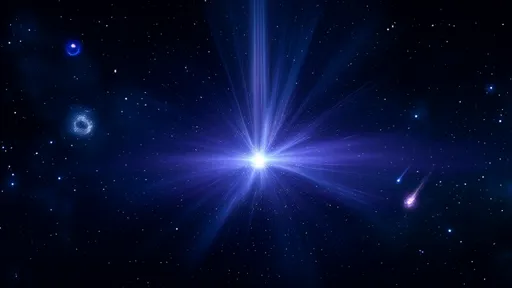
The universe is a vast and mysterious place, filled with phenomena that challenge our understanding of physics. Among the most enigmatic of these are cosmic rays—high-energy particles that travel through space at nearly the speed of light. Their origins have puzzled scientists for over a century, and despite significant advances in astrophysics, the mechanisms behind their acceleration remain one of the great unsolved mysteries of modern science.

Cosmic rays were first discovered in the early 20th century, when scientists noticed that electroscopes discharged even when shielded from known sources of radiation. These particles, primarily protons and atomic nuclei, carry energies far exceeding anything produced in human-made accelerators. Some cosmic rays possess energies so immense that their origins must involve the most violent and energetic processes in the universe.

Where do these particles come from? The leading theories point to extreme astrophysical environments, such as supernova remnants, active galactic nuclei, and gamma-ray bursts. Supernovae, the explosive deaths of massive stars, are prime suspects. The shockwaves from these cataclysmic events could accelerate particles to tremendous speeds, propelling them across interstellar space. Yet, while supernovae are capable of producing cosmic rays, they may not account for the ultra-high-energy particles that occasionally reach Earth.

Another compelling candidate is the environment around supermassive black holes. Active galactic nuclei (AGN), powered by these black holes, emit jets of plasma that stretch for thousands of light-years. The turbulent magnetic fields within these jets could act as natural particle accelerators, boosting charged particles to near-light-speed. However, direct evidence linking AGN to the highest-energy cosmic rays remains elusive, leaving room for alternative explanations.

One of the biggest challenges in tracing cosmic rays back to their sources is their charged nature. Unlike light, which travels in straight lines, cosmic rays are deflected by interstellar and intergalactic magnetic fields. By the time they reach Earth, their trajectories are so scrambled that pinpointing their origins becomes nearly impossible. Scientists rely instead on secondary particles produced when cosmic rays collide with Earth's atmosphere, using detectors like the Pierre Auger Observatory to gather clues about their energies and compositions.

Despite these obstacles, recent advancements in multi-messenger astronomy—combining data from cosmic rays, gamma rays, and neutrinos—have opened new avenues for research. The detection of a high-energy neutrino in 2017, coinciding with a gamma-ray flare from a distant blazar, marked a breakthrough. This correlation suggested that blazars, a type of AGN with jets pointed toward Earth, could indeed be sources of cosmic rays. Yet, many questions remain unanswered, and the search for definitive proof continues.

What makes cosmic rays particularly fascinating is not just their extreme energies but also their role in shaping the universe. These particles contribute to the ionization of interstellar gas, influencing star formation and galactic evolution. Some researchers even speculate that cosmic rays may have played a part in the origins of life by triggering chemical reactions in the early Earth's atmosphere.

As technology advances, so too does our ability to probe the mysteries of cosmic rays. Upcoming observatories, such as the Cherenkov Telescope Array, promise to deliver unprecedented insights into high-energy astrophysics. Meanwhile, particle physicists continue to refine models of cosmic ray acceleration, exploring how shock waves, magnetic reconnection, and other mechanisms could generate such extraordinary energies.

The quest to unravel the origins of cosmic rays is far from over. Each new discovery brings us closer to understanding these enigmatic particles, yet the universe always seems to hold another layer of mystery. Whether born in the aftermath of stellar explosions, the hearts of active galaxies, or even more exotic phenomena, cosmic rays remind us of the incredible forces at work in the cosmos—and the enduring human drive to uncover their secrets.
Recommend Posts
Science

Carbon Cycle in Ecosystems: The Material Flow Chain from Atmosphere to Organisms

By /Jun 20, 2025

The intricate dance of carbon through Earth's ecosystems represents one of nature's most elegant balancing acts. From the air we breathe to the wood of ancient trees, carbon atoms embark on remarkable journeys that sustain life while maintaining atmospheric equilibrium. This perpetual cycling connects all living organisms through an invisible web of matter and energy exchange that has shaped our planet for billions of years.
Science

Doppler Effect: The Mystery of Frequency Changes in Sound and Light

By /Jun 20, 2025

The Doppler effect is one of those fascinating phenomena that we encounter in our daily lives without always realizing it. Whether it’s the changing pitch of a passing ambulance siren or the redshift observed in distant galaxies, this principle governs how waves—be they sound or light—behave when there’s relative motion between the source and the observer. The implications stretch far beyond simple observations, influencing fields as diverse as astronomy, medicine, and even traffic control.
Science

The Big Bang: A Scientific Explanation of the Origin of Everything

By /Jun 20, 2025

The universe as we know it began with an event so cataclysmic that its echoes still reverberate through the fabric of space and time. The Big Bang theory, the prevailing cosmological model, describes the birth of the cosmos from an infinitely dense and hot singularity approximately 13.8 billion years ago. This singular moment marked not just the beginning of matter and energy but also the very dimensions of space and time themselves. The implications of this theory stretch far beyond mere astrophysics—it reshapes our understanding of existence, causality, and the fundamental nature of reality.
Science

Artificial Photosynthesis: Simulating Solar Energy Conversion in the Lab

By /Jun 19, 2025

In the quiet hum of laboratories around the world, scientists are bending light to their will, attempting to replicate one of nature’s most elegant feats: photosynthesis. For decades, the dream of artificial photosynthesis has tantalized researchers, offering the promise of clean energy harnessed directly from sunlight, much like plants have done for millions of years. But where plants effortlessly convert sunlight, water, and carbon dioxide into oxygen and glucose, human-made systems have struggled to match this efficiency. Recent breakthroughs, however, suggest that the gap may finally be narrowing.
Science

Topological Data Analysis: Geometric Approaches to Unraveling the Structure of Complex Datasets

By /Jun 19, 2025

In the age of big data, traditional statistical methods often struggle to capture the intricate structures hidden within vast and high-dimensional datasets. Enter topological data analysis (TDA), a revolutionary approach that borrows concepts from algebraic topology to uncover the shape and connectivity of data. Unlike conventional techniques that focus on metrics like mean or variance, TDA treats data as a geometric object, revealing holes, clusters, and persistent features that persist across multiple scales. This paradigm shift is transforming fields ranging from genomics to finance, offering insights that were previously invisible to analysts.
Science

Neurodegenerative Diseases: Brain Pathologies Triggered by Protein Misfolding

By /Jun 19, 2025

The human brain, a marvel of biological engineering, remains vulnerable to insidious processes that gradually erode its function. Among the most perplexing and devastating of these are neurodegenerative diseases, where the very building blocks of neurons – proteins – turn against the intricate machinery they once supported. At the heart of this betrayal lies a fundamental biological flaw: protein misfolding, a process where molecules crucial for cellular function twist into malignant shapes, triggering cascades of destruction.
Science

Performance of Carbon Nanotubes: The Mechanical and Electrical Wonders of One-Dimensional Nanomaterials

By /Jun 19, 2025

The world of nanomaterials has witnessed a revolution with the discovery and development of carbon nanotubes (CNTs). These one-dimensional nanostructures, composed of rolled-up graphene sheets, have captivated researchers and engineers alike with their extraordinary mechanical and electrical properties. Unlike any other material known to man, carbon nanotubes combine strength, flexibility, and conductivity in ways that defy conventional material science paradigms.
Science

Cosmic Ray Origin: The Mystery of High-Energy Particle Acceleration Across the Interstellar Medium

By /Jun 19, 2025

The universe is a vast and mysterious place, filled with phenomena that challenge our understanding of physics. Among the most enigmatic of these are cosmic rays—high-energy particles that travel through space at nearly the speed of light. Their origins have puzzled scientists for over a century, and despite significant advances in astrophysics, the mechanisms behind their acceleration remain one of the great unsolved mysteries of modern science.
Science

Molecular Switches of Stem Cell Differentiation: The Destiny Determination of Totipotent Cells

By /Jun 19, 2025

In the intricate dance of embryonic development, totipotent stem cells hold a unique position as the ultimate architects of life. These remarkable cells, capable of giving rise to an entire organism, make fate-determining decisions through an exquisitely tuned molecular symphony. Recent breakthroughs have begun to unravel the complex regulatory networks that serve as biological switches, directing these master cells toward their ultimate destinies.
Science

Magnetic Confinement Fusion: The Quest for Artificial Sun in Tokamak Devices

By /Jun 19, 2025

The quest for harnessing the power of the stars has long captivated scientists and engineers, and at the forefront of this endeavor lies the tokamak—a donut-shaped chamber designed to replicate the fusion processes that fuel our sun. Magnetic confinement fusion, the principle behind tokamaks, offers a tantalizing glimpse into a future of nearly limitless, clean energy. Unlike traditional nuclear fission, which splits atoms and produces long-lived radioactive waste, fusion combines light atomic nuclei, releasing vast amounts of energy with minimal environmental impact. The tokamak, with its intricate magnetic fields, stands as humanity’s most promising tool to achieve this dream.
Science

Riemann Hypothesis: The Century-Old Unsolved Problem of Prime Number Distribution Law

By /Jun 19, 2025

The Riemann Hypothesis, often described as the holy grail of mathematics, has remained one of the most profound unsolved problems for over a century. Proposed by the German mathematician Bernhard Riemann in 1859, this conjecture delves into the enigmatic distribution of prime numbers—those indivisible integers that serve as the building blocks of all numbers. Despite countless attempts by the brightest minds in mathematics, the hypothesis continues to resist proof, standing as a testament to the complexity and beauty of number theory.
Science

Deep-Sea Hydrothermal Vent Ecosystem: An Oasis of Life Relying on Chemical Energy in the Darkness

By /Jun 19, 2025

In the perpetual darkness of the ocean’s abyss, where sunlight cannot penetrate and pressures crush all but the most resilient, life thrives in ways that defy conventional understanding. Deep-sea hydrothermal vents, often called "black smokers," spew superheated, mineral-rich fluids into the frigid water, creating oases of life in an otherwise barren landscape. These otherworldly ecosystems are sustained not by photosynthesis, but by chemosynthesis—a process where microbes convert toxic chemicals into energy, forming the foundation of a food web that supports an array of bizarre and fascinating creatures.
Science

Artificial Neural Networks: Algorithmic Models Emulating the Working Principles of the Brain

By /Jun 19, 2025

The human brain has long served as the ultimate inspiration for computational models seeking to replicate its remarkable capabilities. Artificial neural networks (ANNs) represent one of the most successful attempts at creating algorithmic systems that mirror the brain's fundamental operational principles. These sophisticated mathematical constructs have revolutionized fields ranging from computer vision to natural language processing, demonstrating an uncanny ability to learn patterns and make decisions in ways that increasingly resemble biological cognition.
Science

Protein Folding Code: The Folding Enigma from Amino Acid Chain to Functional Structure

By /Jun 19, 2025

The intricate dance of protein folding represents one of biology's most captivating mysteries. For decades, scientists have sought to decipher the hidden code that transforms a linear sequence of amino acids into a perfectly functional three-dimensional structure. This process, fundamental to all life, holds the key to understanding diseases, designing novel therapeutics, and unlocking nature's architectural blueprints.
Science

Ultracold Atom Physics: Control of Quantum States Near Absolute Zero

By /Jun 19, 2025

In the realm of quantum physics, few frontiers are as tantalizing as the study of ultracold atoms. By cooling atoms to temperatures just a hair's breadth above absolute zero, scientists unlock bizarre and fascinating states of matter that defy classical intuition. These extreme conditions reveal quantum behaviors on macroscopic scales, offering a playground for probing fundamental physics and developing revolutionary technologies.
Science

Exoplanet Atmosphere Analysis: Spectral Fingerprints for the Search of Extraterrestrial Life

By /Jun 19, 2025

The search for life beyond Earth has entered a revolutionary phase with the advent of advanced spectroscopic techniques applied to exoplanetary atmospheres. As astronomers peer into the chemical compositions of distant worlds, they are hunting for spectral fingerprints—unique molecular signatures that could indicate the presence of biological activity. This pursuit is no longer confined to science fiction; it is a rigorous scientific endeavor reshaping our understanding of life’s potential in the cosmos.
Science

Brain-Computer Interface Technology: Direct Dialogue Between Neural Signals and Electronic Devices

By /Jun 19, 2025

In a world where technology continues to push the boundaries of human capability, brain-computer interfaces (BCIs) stand at the forefront of innovation. These systems, which facilitate direct communication between neural signals and electronic devices, are no longer confined to the realm of science fiction. From medical breakthroughs to futuristic consumer applications, BCIs are reshaping how we interact with machines—and even each other.