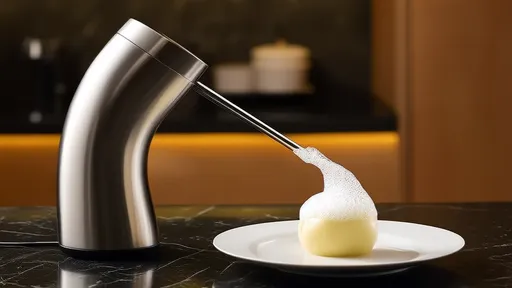
In the ever-evolving world of culinary innovation, few transformations are as mesmerizing as the alchemy that turns humble mashed potatoes into an ethereal foam. The technique, popularized by Spanish avant-garde cuisine, employs a simple siphon bottle to create what’s now famously known as "Espuma de Patata"—a light-as-air potato mousse that defies expectations. This dish, a staple in modernist kitchens, is a testament to how science and tradition can collide to create something extraordinary.
The journey begins with the foundation: a velvety potato purée. Unlike traditional mashed potatoes, which rely on butter and cream for richness, the base for potato espuma demands precision. The potatoes are typically cooked until tender, then passed through a fine sieve or tamis to eliminate any graininess. The resulting purée is then enriched—but sparingly—with ingredients like warm milk, a touch of butter, and seasoning. The key lies in the texture; it must be smooth enough to flow through the siphon’s nozzle yet sturdy enough to hold its structure when aerated.
Enter the siphon, a device more commonly associated with whipped cream. Charged with nitrous oxide (N2O) cartridges, the siphon becomes a tool of culinary magic. When the potato mixture is loaded into the canister and charged, the gas dissolves into the purée under pressure. Upon release, the sudden drop in pressure causes the gas to expand, creating thousands of microscopic bubbles that transform the dense purée into a cloud-like foam. The result is a dish that retains the earthy, comforting flavor of potatoes but with a texture so delicate it seems to dissolve on the tongue.
Chefs often play with contrasts when serving potato espuma. It might be paired with crispy elements like fried shallots or jamón ibérico to offset its weightlessness, or layered over a rich sauce to create a hot-and-cold sensation. Some even freeze the foam briefly to stabilize it, turning it into a savory mousse that can be plated with artistic flair. The versatility of the technique is staggering—what starts as a rustic staple becomes a canvas for creativity.
Behind the spectacle lies a deeper understanding of food science. The siphon’s success depends on the balance of fats, liquids, and starches in the purée. Too much fat, and the foam collapses; too little, and it lacks richness. The temperature also plays a critical role—too cold, and the gas won’t properly integrate; too hot, and the foam risks becoming unstable. It’s a dance of variables that chefs master through experimentation.
What makes this technique so compelling is its accessibility. Unlike some molecular gastronomy methods that require specialized ingredients, potato espuma can be replicated in home kitchens with a basic cream whipper. This democratization of high-tech cooking has made it a favorite among amateur cooks eager to impress. Yet, its simplicity is deceptive. Achieving the perfect consistency—neither too dense nor too fragile—requires patience and practice.
The cultural resonance of this dish is equally fascinating. In Spain, where potatoes are a dietary cornerstone, the espuma is both a homage and a rebellion. It respects the ingredient’s heritage while subverting its form. This duality is at the heart of modernist cuisine: honoring tradition while relentlessly pushing boundaries. From tapas bars to Michelin-starred restaurants, the potato foam has become a symbol of culinary evolution.
As diners increasingly seek experiences as much as meals, techniques like this redefine what food can be. The first time one tastes potato espuma, the surprise is palpable—how can something so familiar feel so new? That’s the power of culinary innovation: not just to feed, but to delight and provoke. And in this case, it all starts with a siphon, a potato, and a sense of wonder.
By /Jun 18, 2025
By /Jun 18, 2025
By /Jun 18, 2025
By /Jun 18, 2025
By /Jun 18, 2025
By /Jun 18, 2025
By /Jun 18, 2025
By /Jun 18, 2025
By /Jun 18, 2025
By /Jun 18, 2025
By /Jun 18, 2025
By /Jun 18, 2025
By /Jun 18, 2025
By /Jun 18, 2025
By /Jun 18, 2025
By /Jun 18, 2025
By /Jun 18, 2025
